
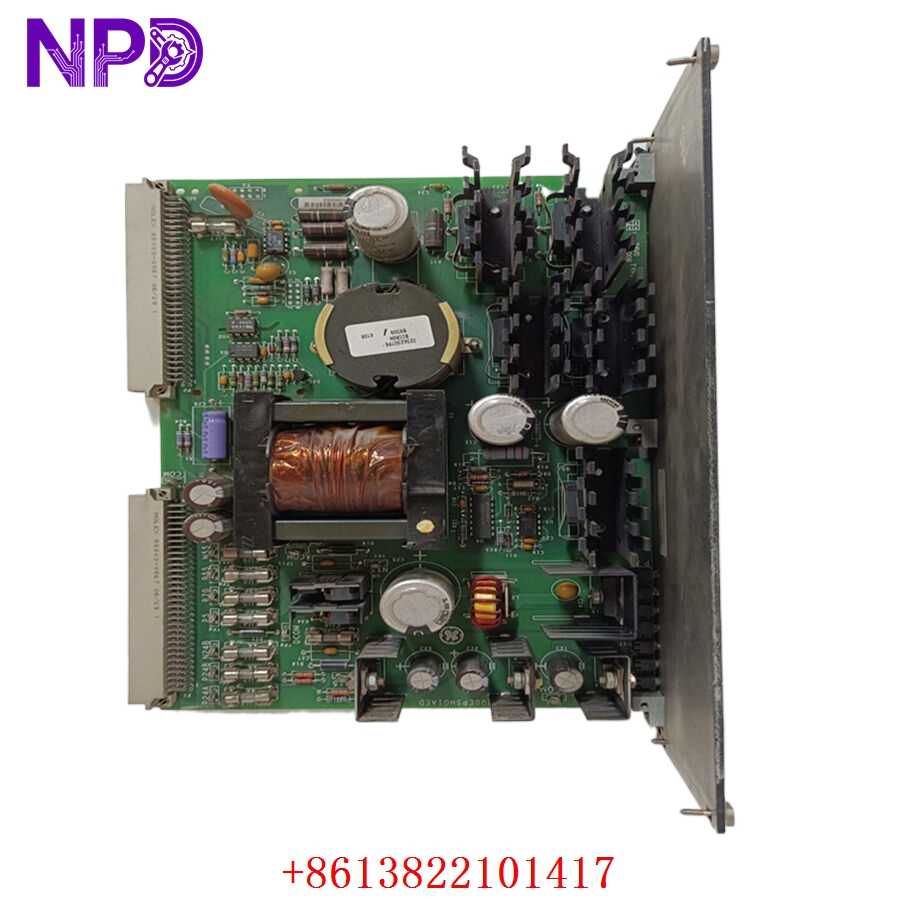
GE IS200EPSMG1AED Power Supply Module
$ 95.45
Description �� Model: IS200EPSMG1AED �� Brand: GE (General Electric) ⛓️ Series: Mark VI / VIe Speedtronic Turbine Control System �� Core Function: Power supply management and distribution for control rack components ��️ Type: Power Supply Module (PSMG) ⚡ Key Specs: High-efficiency DC-to-DC conversion, diagnostic feedback ⚡ Input: Typically 24/125 V DC (Input voltage rating varies by specific cabinet configuration) ⚙️ Output: Regulated multi-voltage DC outputs for CPU and I/O cards ��️ Operating Temp: 0°C to 60°C ��️ Protection: Over-voltage and short-circuit protection built-in �� Status Indicators: Power OK, Fault, and Diagnostic LED array ��️ Mounting: Direct mount in Mark VI/VIe control rack �� Interface: Rear-mounted connector for secure backplane power delivery Installation & Configuration Guide Phase 1: Preparation (20 mins) ⚠️ Safety First: Critical Warning: Turbine control systems are mission-critical. Ensure the turbine is in a “shutdown” or “maintenance” state. Verify the input power source is isolated and locked out. �� Use an anti-static wrist strap; the IS200EPSMG1AED contains complex surface-mount logic for diagnostic signaling. Phase 2: Removal & Installation (25 mins) �� Record Settings: Before disconnecting, note the position of the board in the rack and any local status indicators. �� Detachment: Release the top and bottom latching mechanisms. Pull the module out gently. �� Insertion: Align the board with the rack guides. Push firmly until the backplane connectors seat completely. Latch the levers. �� Wiring/Connections: Ensure the rear interface connector is fully engaged. A loose connection here can cause intermittent voltage drops, triggering false system alarms. Phase 3: Testing & Commissioning (15 mins) �� Power-Up: Apply input power. The “Power OK” LED should illuminate immediately. �� Diagnostic Sync: Check the Mark VI HMI/Workstation. The PSMG module should show “Healthy” status in the diagnostic page. �� Voltage Validation: Use a high-impedance multimeter to verify output voltages at the rack test points. �� Fault Monitoring: Monitor for 10-15 minutes to ensure thermal stability and that no “Power Supply Fault” flags are triggered in the controller logs. Customer Cases & Industry Applications Case: Emergency Power Supply Restoration in Power Plant Situation: A combined-cycle power plant relied on the IS200EPSMG1AED to provide regulated DC power to their primary Mark VI turbine controller. Task: An internal component failure in the PSMG module caused a “Loss of Control Power” alarm, which triggered a precautionary trip of the turbine. Action: We provided a New Surplus unit. Because these modules provide critical diagnostic feedback to the HMI, we performed a pre-shipment functional test to verify that the fault-reporting logic was fully operational. Result: The replacement allowed the plant to clear the alarm status and bring the unit back online in time for the peak-demand window. The plant manager subsequently ordered a second unit as a permanent site spare, citing the rarity of this specific Mark VI revision. Frequently Asked Questions (FAQ) Q: Is the IS200EPSMG1AED a direct replacement for previous revisions (e.g., A-D)? A: Generally, yes. The “AED” suffix indicates a specific revision level. While they are often backward compatible, always check your Mark VI system documentation or the hardware revision label on your existing rack to ensure software-to-hardware compatibility. Q: Is the unit new? A: We provide New Surplus modules. These are original GE-manufactured components, not refurbished. In turbine control environments, reliability is the top priority; we avoid used or repaired power modules due to the risk of capacitor aging. Q: What if the “Fault” LED stays lit after replacement? A: If the Fault LED is lit on a new replacement, check: Is the input voltage correctly wired? Is there a short circuit elsewhere in the rack that is dragging down the output? Is the board fully seated in the backplane? If all checks out, perform a system-wide diagnostic reset via the Mark VI HMI. Q: Does this require software programming? A: No, the IS200EPSMG1AED is a hardware-based power module. It communicates status to the system via the backplane, but it does not store application logic itself. Simply replace and power on.